What Is the Stock Market, Really?
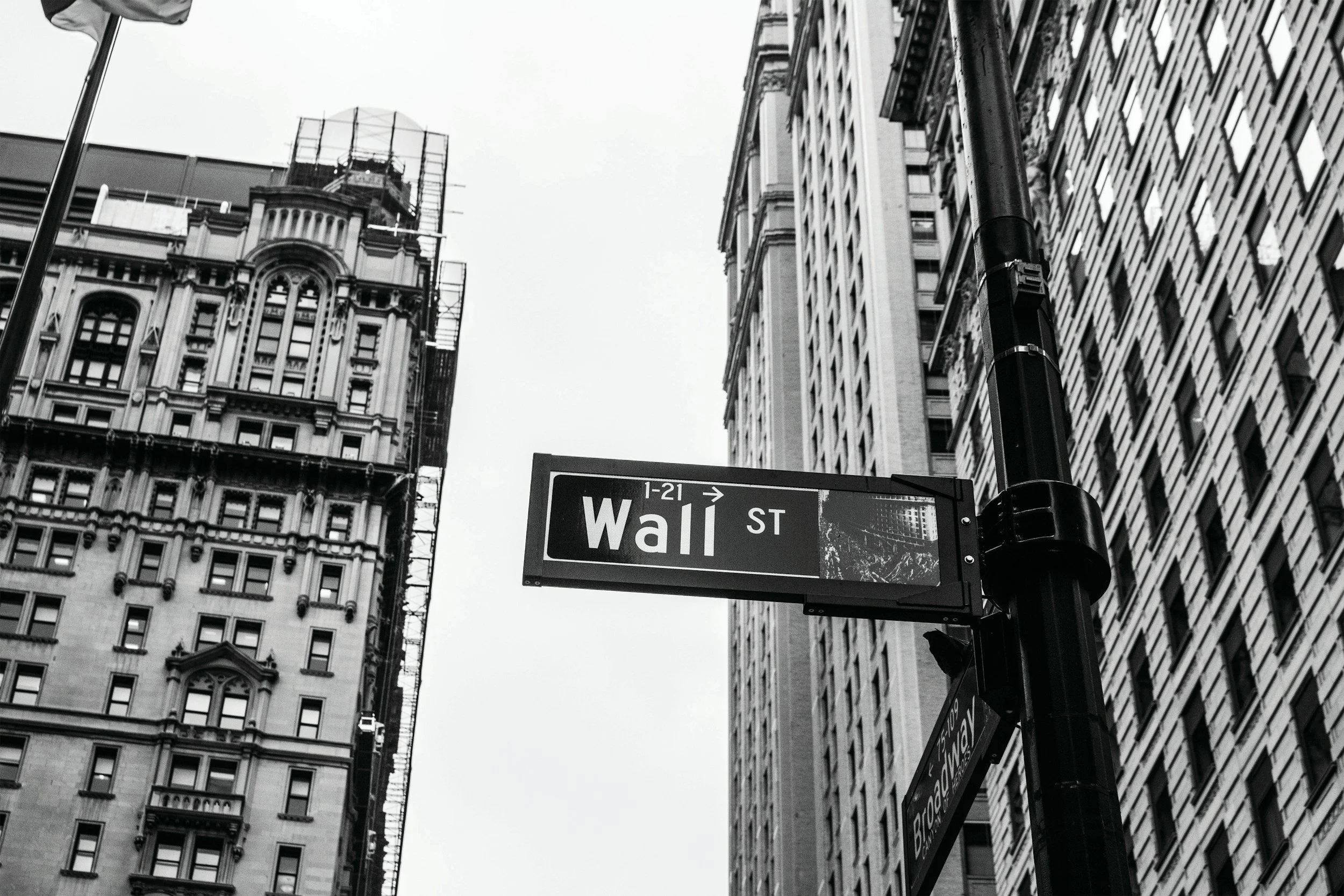
Most people have money tied to it. Far fewer could explain what it actually is.
You probably have a retirement account. A 401(k), maybe an IRA. You have watched the number go up. You have definitely watched it go down, usually right after you checked it for the first time in months. And at some point you have had the same quiet thought almost everyone has but almost no one admits: what is this thing actually doing with my money?
That disconnect is more common than you think. Intelligent, highly capable people who make complex decisions for a living, physicians, attorneys, engineers, founders, often realize they have been participating in something for years without fully understanding it. Not because it is too complicated, but because no one ever explained it like a human being. That changes here.
What the Stock Market Actually Is
At its core, the stock market is a place where ownership in businesses is bought and sold. Not ideas, not abstract numbers on a screen. Real companies that make real products, employ real people, and generate real revenue.
When a company wants to grow it needs money to do it, and it has two basic options. It can borrow from a bank, or it can divide itself into millions of small pieces and offer those pieces to the public. Those pieces are called shares, or stocks, and buying one means you own a tiny fraction of that business. Not symbolic ownership but actual ownership, the kind that grows when the company grows and shrinks when it does not.
Here is where it gets personal. You have probably spent thousands of dollars with Apple over the years, every iPhone upgrade, every app purchase, every iCloud subscription, all of it helping the company grow into one of the most valuable businesses in history. What most people never realize is that they could have been growing alongside Apple instead of just paying it.
A $1,000 investment in Apple in 2010 would be worth over $170,000 today. Not because someone got lucky, but because they owned a piece of a business that grew, and their ownership grew with it. That is the shift the stock market makes possible: you stop being just a customer and become a participant in the upside, and once you see that shift you cannot unsee it.
How It Actually Works
Once those ownership pieces exist, people begin trading them. Some want to buy, some want to sell, and every second of every trading day prices are being negotiated between the two in real time. If a buyer is willing to pay more than the last price, the price moves up, and if sellers are willing to accept less, it moves down.
There is no central authority deciding what anything is worth at any given moment. It is a continuous negotiation between millions of people, institutions, and computers, all placing bets on what something is worth right now. Think of it like the world's largest, fastest, most caffeinated farmers market, except instead of tomatoes and sourdough people are trading ownership stakes in companies, and instead of haggling over a few dollars prices are updating thousands of times per second based on earnings reports, economic data, and occasionally the mood of a billionaire on social media.
The mechanism is identical to any marketplace, supply and demand and the constant human attempt to figure out what something is worth. What makes the stock market different from your local farmers market is not the negotiation, it is the speed and the scale.
One detail most people miss is liquidity, which means how easily something can be turned into cash. Unlike real estate or a private business, where selling can take months of paperwork and negotiation, shares of public companies can usually be sold in seconds, and that flexibility is one of the reasons the system works so well for individual investors.
Why Prices Move So Much
This is where confusion usually starts, and it trips up a lot of smart people, so no judgment here. Prices are not based on what a company is worth today. They are based on what people believe it will be worth in the future, and even small shifts in that belief move the price almost immediately.
When COVID hit in March 2020, the stock market dropped 34% in 33 days. Not because every company suddenly became worthless, but because expectations about the future changed overnight. Investors did not know how long businesses would be shut down, how deep the recession would go, or when things would recover, and that uncertainty repriced everything almost instantly. Then expectations shifted again, the market recovered within months, and went on to reach new highs. Same companies, different expectations.
The practical takeaway is this: short-term market movement is noise, and long-term market movement is signal. Over longer periods prices tend to follow the actual growth of the businesses underneath them, and learning to ignore the noise and trust the signal is where most investors either succeed or fall apart.
Take David, a 47-year-old anesthesiologist who panicked on March 23, 2020, sold his entire portfolio at the bottom, and waited two full years before reinvesting because he was sure another crash was coming. By the time he got back in, the market had nearly doubled from where he sold, and his account is still smaller today than it would have been if he had simply done nothing. The mistake was not that he panicked, panicking is human. The mistake was acting on it, and the portfolio drop that scared him into selling turned out to be the best buying opportunity of the decade.
The Exchanges and Indexes You Always Hear About
In the United States, stock trading happens through organized exchanges, and the two you will hear about most are the New York Stock Exchange and the Nasdaq. The NYSE is the older of the two, home to many large, established companies with long track records. The Nasdaq skews toward technology and growth companies, with Apple, Microsoft, Amazon, and most of the companies shaping modern life listed there.
Think of them less as competing markets and more as different venues where companies choose to list themselves, like choosing between two prestigious addresses in the same city. Then there are the indexes, which is where people get genuinely confused, because an index is not a place. It is a collection of companies used to measure how a broad group is performing.
The S&P 500 tracks roughly 500 of the largest companies in the United States, and when someone says "the market is up today" they almost always mean the S&P 500 is up. The Dow Jones Industrial Average tracks just 30 large companies and gets outsized media attention despite being far less representative of the overall economy, which is one of the small ironies of financial news. The Nasdaq Composite reflects the broader performance of technology-heavy companies, and these indexes together function as scorecards for asking how large groups of companies are doing at any given moment.
Indexes matter because they let you invest broadly through diversified funds instead of trying to pick individual companies, and that is where most long-term investors focus their money. The same structure exists everywhere, with Japan's Nikkei, the UK's FTSE 100, India's Sensex, and Germany's DAX all serving the same function: ownership in businesses, traded in an organized way, with prices reflecting collective expectations about future value.
Why This Actually Matters for You
You do not need to actively trade anything to benefit from this system. If you have a retirement account, you are already participating, and that 401(k) you have been watching go up and down without fully understanding is doing exactly what we just walked through.
When your account grows, it is because the companies inside it have grown in value. When it drops, it is because expectations about those companies have shifted. The stock market is the engine, and your savings rate, the percentage of your income you consistently invest, determines how much fuel you give that engine. More fuel invested earlier means more time for the engine to compound, while less fuel or fuel added late means the engine has less to work with.
Think of it like exercise. You do not need to be an elite athlete to benefit from moving your body consistently, you just need to show up over a long period of time. The people who get hurt are usually the ones who sprint before they can walk, or who stop entirely after one bad week, and the stock market rewards exactly the same thing: patience, consistency, and the willingness to keep showing up after a $5,000 starting investment has had time to grow into something the spreadsheet did not predict.
Most long-term wealth is not built by timing the market perfectly, picking the right stocks, or reacting to headlines. It is built by participating consistently, owning many companies at once through diversified funds, and staying invested long enough for growth to compound. That approach, boring as it sounds, outperforms almost every more exciting alternative over the long run. Most domains reward effort but investing is the rare one where the instruction is closer to a Buddhist mantra than a fitness program: don't just do something, sit there.
THE BOTTOM LINE
• The stock market is shared ownership in real businesses, traded continuously, with prices reflecting collective expectations about the future rather than what a company is worth today.
• Short-term price movement is noise driven by shifting expectations, while long-term movement follows the actual growth of the businesses underneath. The investors who win are the ones who learn the difference and refuse to act on the noise.
• You are likely already participating through your retirement account. The two variables you control are how much you invest and how long you stay invested, and both matter more than anything else you might do.
Money Questions
-
A stock represents ownership in a company. When the company grows, your investment grows with it. A bond represents a loan you make to a company or government in exchange for regular interest payments. Stocks carry more volatility but more long term upside. Bonds are generally more stable but grow more slowly. Most well-built portfolios use a combination of both, with the balance shifting based on how much time you have before you need the money.
-
In the short term, prices move unpredictably and sometimes dramatically, as anyone who checked their account in March 2020 can confirm. Over longer periods, the market has historically reflected the growth of businesses and economies, recovering from every major downturn in history and going on to reach new highs. The key variable is time horizon. The longer you stay invested, the more the short term noise fades and the long term signal takes over. The biggest risk for most people isn't the market itself. It's leaving too early or never entering at all.
-
Start with a retirement account, a 401(k) through your employer or an IRA you open yourself. Inside that account, choose broad diversified funds that hold many companies at once rather than trying to pick individual stocks. Keep contributions consistent, increase them when your income grows, and resist the urge to react to short term swings. That approach, simple, consistent, and boring, outperforms complexity for the vast majority of investors over the long run. The best time to start was yesterday. The second best time is today.
By Karim Ali, MD, MBA. Emergency Physician & Finance Educator